

Pull-ups are one of the most effective and functional exercises for building upper body strength and enhancing overall fitness. They primarily target the muscles in the back, shoulders, and arms while also engaging the core for stability. While the traditional pull-up is an excellent exercise on its own, incorporating various pull-up variations into your workout routine can help target specific muscle groups, prevent plateaus, and maximize muscle engagement for functional fitness gains. In this article, we will explore a range of pull-up variations to take your training to the next level.
The Traditional Pull-Up
Before delving into the variations, it’s essential to review the proper form and technique of the traditional pull-up. To perform a pull-up:
Step 1: Find a sturdy pull-up bar with a grip that allows your palms to face away from your body (pronated grip).
Step 2: Hang from the bar with your arms fully extended, shoulder-width apart.
Step 3: Engage your core and pull your body upward by contracting your back and arm muscles.
Step 4: Continue pulling until your chin is above the bar.
Step 5: Lower your body back down to the starting position with control.

Mastering the traditional pull-up is crucial as it forms the foundation for the following variations.
Chin-Up
The chin-up is similar to the traditional pull-up, but with a slight change in hand placement fitness. Instead of a pronated grip, use a supinated grip, where your palms face towards your body. The chin-up shifts the focus to the biceps and provides an excellent variation for targeting the muscles in the front of your upper body, including the chest and anterior deltoids.
Wide Grip Pull-Up
To perform a wide grip pull-up, place your hands wider than shoulder-width apart on the pull-up bar. This variation emphasizes the lats and shoulders, promoting width and creating a V-tapered physique. However, it may reduce the range of motion compared to a traditional pull-up, so it’s essential to engage your muscles fully to maintain proper form throughout the exercise.
Close Grip Pull-Up
Conversely, the close grip pull-up involves bringing your hands closer together, either at shoulder-width or even narrower. This variation targets the inner back muscles, including the rhomboids and lower traps, while also placing more emphasis on the biceps. The close grip pull-up can be particularly useful for improving overall pulling strength and stability.

Commando Pull-Up
The commando pull-up combines elements of the traditional pull-up,chin-up, and pull up hooks. To perform this variation:
Step 1: Begin with a wide grip on one hand and a narrow grip on the other.
Step 2: As you pull your body upward, switch your grip, so the hand positions alternate at the top of the movement.
The commando pull-up challenges the stabilizing muscles of the shoulders and forearms and enhances overall grip strength.
L-Sit Pull-Up
The L-sit pull-up adds an extra challenge by incorporating core strength and stability. To perform this variation:
Step 1: Start by hanging from the bar with a pronated grip.
Step 2: Engage your core and lift your legs until they are parallel to the floor, forming an L-shape with your body.
Step 3: Perform a traditional pull-up while maintaining the L-sit position throughout the movement.
The L-sit pull-up targets the entire upper body while also engaging the hip flexors and lower abs for a full-body workout.
Towel Pull-Up
The towel pull-up is an advanced fitness variation that requires a pair of towels or gym rings. Wrap the towels around the pull-up bar and hold one end of each towel in each hand. This variation increases grip strength and challenges the stabilizer muscles in the shoulders and forearms.
How to Perform the Towel Pull-Up
Before attempting the Towel Pull-Up, ensure you have a sturdy overhead anchor point to loop the towels or gym rings around. Here’s how to perform the exercise:
- Setup: Place the towels or gym rings over the overhead anchor point, making sure they are at an even length. The towels should be long enough to hold comfortably with your arms extended overhead.
- Grip: Grab onto the towels or rings firmly with an overhand grip (palms facing away from you). Your hands should be shoulder-width apart, and the towels should hang vertically.
- Starting Position: Stand directly beneath the towels, keeping your body straight and your feet shoulder-width apart.
- Execution: Engage your core and begin pulling yourself upward by squeezing your shoulder blades together and flexing your elbows. Aim to lift your chest towards the towels, just as you would in a regular pull-up.
- Completion: Continue pulling until your chin is level with or above your hands, then lower yourself back down with control to the starting position.
Towel Pull-Up Progressions
The Towel Pull-Up can be quite demanding, so it’s essential to progress gradually and safely. Here are some progressions to help you build up to full Towel Pull-Ups:
- Assisted Towel Pull-Up: Loop a resistance band around the towels and anchor point to assist with the pull-up motion. Adjust the resistance band’s assistance level as needed.
- Mixed Grip Towel Pull-Up: Perform the Towel Pull-Up with one hand using an overhand grip and the other hand using an underhand grip (palms facing you). Switch hand positions after each repetition.
- Single Towel Pull-Up: Master the Towel Pull-Up with both hands gripping one towel before progressing to the full exercise.
- Towel Chin-Up: Use a supinated grip (palms facing you) to perform the Towel Pull-Up. This variation shifts the focus to the biceps and targets different muscle groups.
Safety Tips
- Ensure that the overhead anchor point is secure and can handle your body weight.
- Perform a thorough warm-up before attempting Towel Pull-Ups to prevent injuries.
- Engage your core throughout the exercise to maintain stability and prevent swinging.
- If you feel fatigued or unable to maintain proper form, stop and rest to avoid injury.
One-Arm Pull-Up Progression
The one-arm pull-up is a pinnacle of pulling strength and requires a gradual progression due to its difficulty. Start by incorporating assisted one-arm pull-up exercises, such as using a resistance band or holding a towel with one hand while performing a traditional pull-up with the other. Over time, reduce assistance until you can perform a full one-arm pull-up.
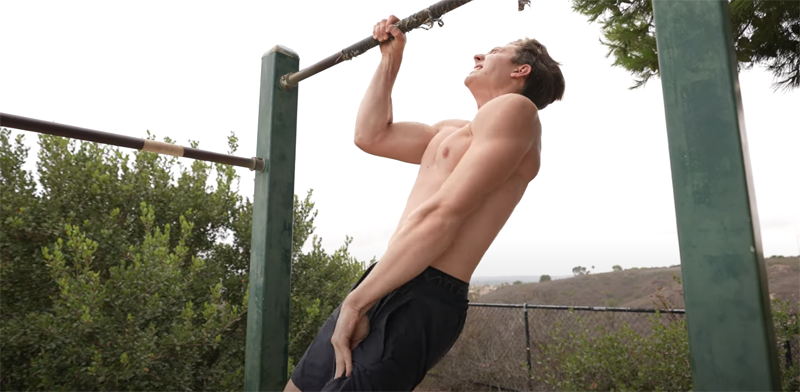
Step 1: Master the Traditional Pull-Up
Before embarking on the one-arm pull-up journey, it is crucial to have a solid Fitness in pull-ups. Master the traditional pull-up with impeccable form, as this will serve as the basis for the subsequent progressions. Focus on building strength in your back, shoulders, and arms through regular pull-up training.
Step 2: Uneven Pull-Ups
Uneven pull-ups help bridge the gap between two-handed pull-ups and the one-arm variation. To perform an uneven pull-up:
- Find a sturdy bar or pull-up station.
- Grip the bar with one hand, while the other hand grips higher up on the bar.
- Initiate the pull-up, ensuring that you engage your back and arm muscles.
- Perform an even number of repetitions on each side to avoid muscle imbalances.
- Uneven pull-ups allow you to gradually shift more weight onto one arm, preparing your body for the eventual transition to the one-arm pull-up.
Step 3: Assisted One-Arm Pull-Up
Assisted one-arm pull-ups reduce the amount of bodyweight you need to lift, making the movement more achievable. Here are two common methods for assisted one-arm pull-ups:
a) Resistance Band Assisted
- Secure a resistance band around the pull-up bar.
- Loop the other end of the band around your working arm.
- Perform the one-arm pull-up, using the band for assistance.
b) Counterweight Assisted
- Use a pulley system or resistance bands with a weight plate or kettlebell attached.
- Hold onto the bar with one hand and hold the counterweight with the other.
- Perform the one-arm pull-up while using the counterweight for assistance.
- Gradually decrease the assistance provided by the resistance band or counterweight as you gain strength.
Step 4: Isometric Holds
Isometric holds help build the static strength required for the one-arm pull-up. Perform one-arm hangs at the top of the pull-up position, focusing on maintaining your body’s position with control. Start with shorter holds and gradually increase the duration as your strength improves.
Safety Tips
- Warm up thoroughly before attempting any one-arm pull-up progression.
- Avoid progressing too quickly; listen to your body and allow sufficient time for recovery.
- Consider using gymnastic rings, as they provide more wrist flexibility and can be easier on your joints.
- Incorporate other exercises that target the back, shoulders, and core to support your one-arm pull-up training.
Health Hazards in Fitness
Health hazards in fitness are potential risks that individuals may encounter while pursuing their exercise and wellness goals. These hazards can arise from various factors, including improper form during workouts, overtraining, inadequate rest, and lack of proper nutrition.
Pushing too hard or neglecting rest can lead to injuries, fatigue, and burnout.Smoking is a grave health hazard within the fitness realm, posing serious risks to individuals’ overall well-being. The harmful chemicals in tobacco smoke can hinder athletic performance, impeding lung function and reducing oxygen uptake in the bloodstream.
Conclusion
Incorporating pull-up variations into your workout routine can take your upper body strength and functional fitness to new heights. Whether you are a beginner or an experienced athlete, these variations offer diverse challenges to engage different muscle groups effectively. Remember always to prioritize proper form and gradually progress to more challenging variations. By incorporating pull-ups and their variations into your training regimen, you’ll be well on your way to achieving maximum muscle Fitness engagement and functional fitness for a strong and well-rounded physique.